






2 hrs
Leeds greats inducted into RL Hall of Fame as part of 'Indomitables'
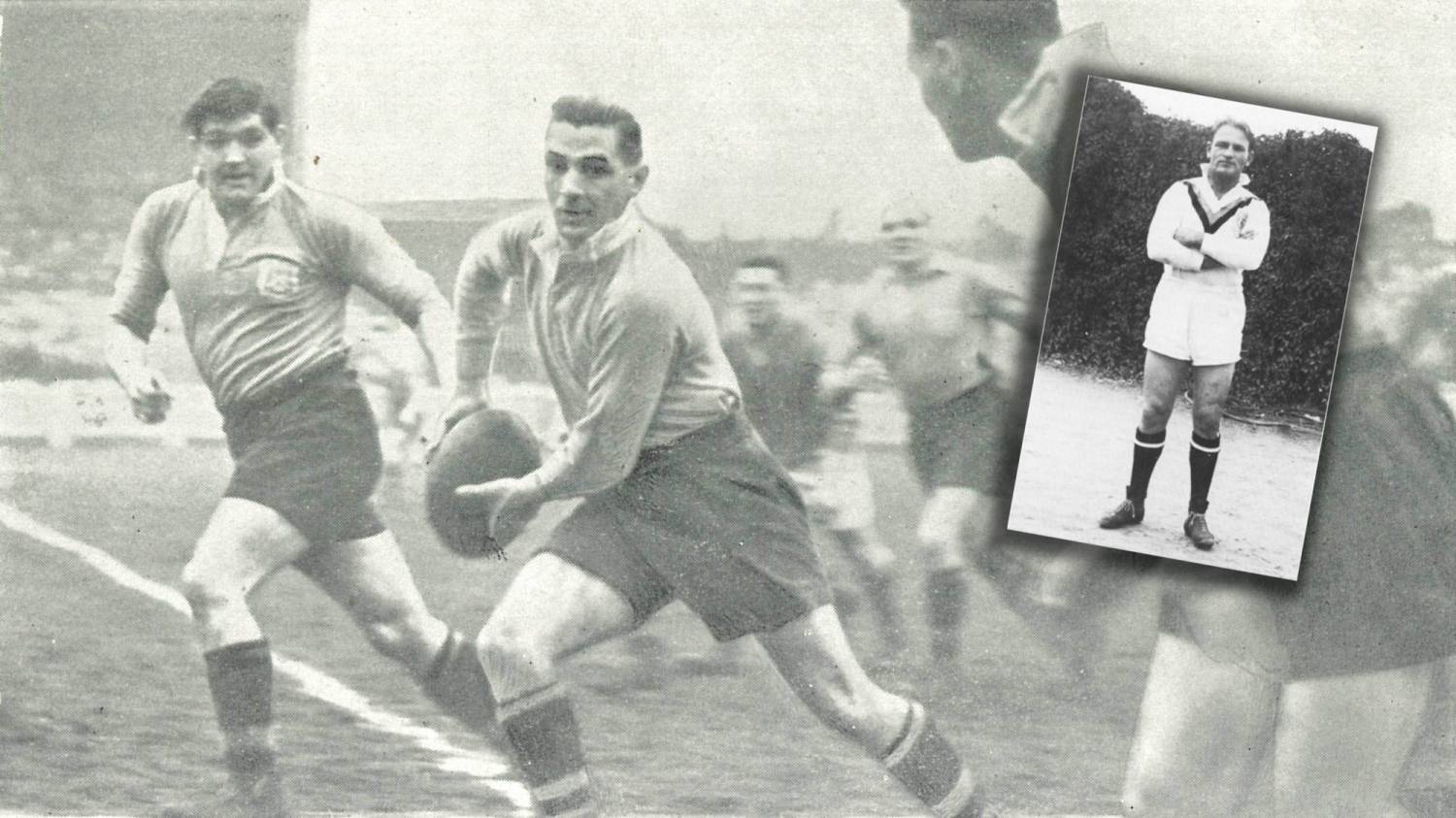
Leeds Rugby League legends Ike Owens and Dai Jenkins have been inducted into the Rugby League Hall of Fame.
The 1946 Great Britain touring squad, famously known as the 'Indomitables', are the second team inducted into the Rugby League Hall of Fame, in recognition of one of the most remarkable achievements in the sport’s international history.
Captained by Gus Risman, one of 11 Welshmen in the squad, they travelled to Australia and New Zealand less than a year after the end of the Second World War, for the first major overseas sporting tour by a British team following the conflict. Officially playing as England (the Great Britain title arrived in 1947), they were away from home for five months, played 27 matches, and returned with 21 wins, one draw and only five defeats, clinching an historic Ashes success along the way.
Loose forward Ike Owens played 18 games on the tour, one of the most in the squad, featuring in all four Tests on tour, and scored a vital try in the Third Test win over the Kangaroos at Sydney Cricket Ground. He scored 11 tries on tour and kicked four goals for a total of 41 points.
Former Leeds President Harry Jepson OBE recalled Owens' contribution to the club a number of years ago. He said, "Ike was one of the players I liked watching the most, his swashbuckling attacking style and rock solid defence making the Welshman an absolute favourite at Headingley. In later years, I met his son and wife at a Lions Hall of Fame dinner in Huddersfield, they had travelled up from Lincoln. We had a terrific reminisce about his dad’s wonderful career. His son, although born in Wales, spent his formative years living at the Town Hall Tavern where Ike was landlord.
"When he was on the 1946 tour, he amazed the Australians, he’d never played on pitches like that and his speed astonished them. He came to prominence during the War and Leeds signed him while he was still a parachute instructor in the RAF and he blossomed at Headingley and helped take us to Wembley in ‘47 as skipper. He moved on to Castleford for a record fee but only stayed six weeks, presumably because they couldn’t understand his Welsh burr, before transferring to Huddersfield. He was one of the game’s true greats."
Scrum half Dai Jenkins played eleven games on the tour but did not feature in the Test matches as he was dogged by injury during the Tour and consequently unable to make a real bid to oust Tommy McCue from the Test teams. Like his compatriot Owens, he was a proud Welshman who moved North and became a great servant to Leeds Rugby League.
Harry Jepson also spoke fondly of Jenkins too. He added, "Dai had a long and distinguished career after a fine piece of business by the club to snap him up from Stretham & Mitchum when they floundered in the mid-30s. A wonderful support player – a key attribute of any scrum half worth his salt – he had everything; he could tackle, run with the ball, make play or follow it and was a fierce competitor.
"In the ’38 Championship Final at Elland Road, he could not have done any more to cover for his injured half back partner Vic Hey with whom he formed a tremendous combination, the pair so often bamboozling defences because they never knew what the duo would try next. He was one of a clutch of Leeds Welshmen in the side that should have won the 1947 Cup Final having not conceded a point on the way there and became captain in his later years such was the respect he was accorded."
The pair were part of the 26 man squad who headed to Australia in the first major sporting series played abroad by a British side in any sport after the Second World War. Their enduring nickname came from HMS Indomitable, the Royal Navy aircraft carrier on which they sailed to Australia – the passage took four weeks - because post-war travel restrictions made normal passenger routes unavailable.
Many of the players in the 26-man squad had only recently returned from wartime service, yet they committed themselves to a demanding itinerary of long journeys, difficult conditions and intense opposition across Australia and New Zealand. Their achievement was crowned by an unbeaten Ashes Test series in Australia: an 8-8 draw in Sydney, followed by a 14-5 win in Brisbane to retain the Ashes, and a decisive 20-7 victory back in Sydney. They remain the only Great Britain Rugby League team to have gone unbeaten in an away Test series against Australia.
The party included many players who would become iconic names in the sport's history, with Risman and Barrow’s Willie Horne, already members of the Hall of Fame. The strong Welsh influence also included Arthur Bassett, who scored a hat-trick in the win at Brisbane, Bradford icon Trevor Foster and Frank Whitcombe, one of the tourists’ try-scorers in the opening Test draw in Sydney – whose son, Martin, has co-authored a book celebrating the tour which was published earlier this year.
With three England teams (Men, Women and Wheelchair), two from Wales and one each from Scotland and Ireland, currently preparing for the 2026 Rugby League World Cup in Australia, RFL Chair Nigel Wood OBE, who chaired the Hall of Fame selection panel meeting, said: “The 1946 Great Britain tourists occupy a very special place in Rugby League history.
"At a time when the country was still emerging from the hardships and losses suffered during the war, they carried the hopes of our sport across the world.
"Invited by the Australian Rugby League to re-introduce international sporting events, revive the Ashes and boost the morale of both nations, they went on to produce a performance of courage, resilience and quality which has stood the test of time. To travel by warship, to spend five months away from home, to play such a demanding schedule and then to go unbeaten in an Ashes series in Australia was an astonishing feat.
"The title ‘Indomitables’ could not have been more appropriate, and it is entirely fitting that this outstanding squad should now be honoured together in the Rugby League Hall of Fame.”
Their induction continues the development of the Hall of Fame’s Teams category, which was introduced two years ago with the recognition of the 1996 Great Britain Lionesses following their trailblazing Ashes series victory in Australia.
The Rugby League Hall of Fame was set up in 1988 to recognise the all-time greats of the sport, celebrating those whose achievements have made an outstanding and lasting contribution to Rugby League.
The list includes the likes of Alex Murphy OBE, Sir Billy Boston, Brian Bevan, Neil Fox CBE, Ellery Hanley MBE and Malcolm Reilly OBE. A Women’s Rugby League Hall of Fame was introduced in 2022 with Sally Milburn, Lisa McIntosh and Brenda Dobek - who all featured on the 1996 Lionesses tour - its inaugural members. Jane Banks and Michelle Land, who also featured on that historic trip, were added two years ago.
Stadium Partner

Technical Partner

Main Partner

Associate Partners